
Chaos is order yet undeciphered. – José Saramago
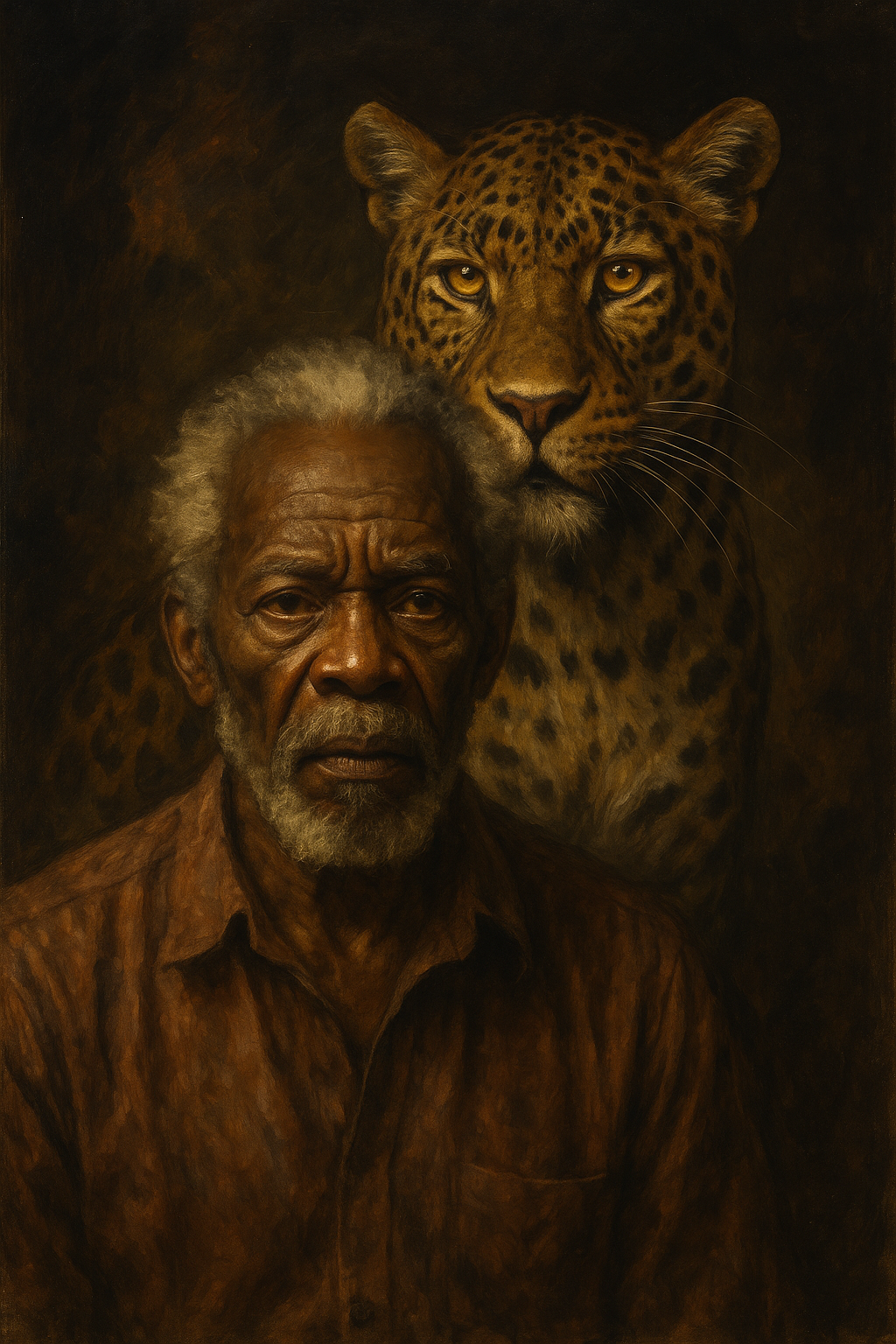
NOVEMBER 27, YEAR 2047
The mystery I share now surpasses anything a human mind can fully comprehend. This final confession, scribbled on my deathbed during a feverish summer night, began with a single, extraordinary encounter.
Before I guide you into this labyrinth of my life, allow me to offer a semblance of order. I am Folarin Oluwadamilare Adams, an African American whose roots stretch deep into Nigeria’s soil. The winds of diaspora carried my parents here before my birth; death’s cold fingers snatched them two months before my seventh birthday. Raised by foster parents, I never married. I have been alone all my life.
My peculiar fate unfolded long after my parents’ deaths. I was a Zoology professor at California State University and nothing delighted me more than teaching others about animals. When not lecturing, I volunteered at the zoo, tending to creatures whose silent company comforted me more than human touch. My life was content, even joyful until it all crumbled.
At forty-seven, I began to cough violently. My body wasted away, wracked with fatigue and a piercing chest pain. I blamed age, shrugging it off until I collapsed one afternoon.
Hospital tests returned with a verdict that shattered my world. I was diagnosed with a rare, aggressive lung cancer. I was given twelve weeks to live.
I spiraled into denial. How could I, who had never smoked, suffer this fate while Professor Collins, a lifelong chain-smoker and a man I despised, lived on? Desperate to defy death, I tried everything, from experimental therapies, holistic rituals, even bizarre spiritual cures. But nothing worked.
As my days dwindled, I found solace gazing out my hospital window at the forest edge. Birds would sing serenades, squirrels and beavers would dance in playful mischief. I had always shared a deep, unspoken connection with animals. A spark glowed when I met their eyes, like a sense of mutual understanding.
In those final weeks, these visits felt like a farewell procession from kindred souls guiding me toward the beyond. Until, one day, something changed.
I awoke to a chilling stillness. At the forest’s edge, a pair of eyes burned like a pharaoh’s golden chalice under the sun. Behind them stood a magnificent leopard. Beyond its physical form, I saw an intelligence, a consciousness far beyond any creature I had known.
“The course of a man’s life is often shaped by chance or preordained encounter.”
For days, it watched me, silently studying. I longed for it to come closer, but it remained distant until my final night.
That night, as I drifted toward what I thought would be my last breath, a presence stirred me. I opened my eyes to find a tall, dark man standing by my bed. His fiery eyes met mine and burned through my soul, unearthing every hidden shame and secret terror.
I felt an overwhelming dread, as if every cell in my body rebelled against his gaze. His voice, deep and accented, thundered inside my head without his lips moving: “I am before you now, as you wished.”
Panic set in. My body trembled as sweat pooled on my skin. In that instant, two realizations struck me: this man was the leopard who had been keeping a death watch.
When I regained consciousness, he stood staring out the window. Without turning, his voice reverberated in my mind: “Be at ease. I come in peace. I have a tale and a proposition; one you cannot refuse.”
Then he turned and smiled. A smile so cold it turned my blood to ice.
“The price of providence is often too great a burden for one man to bear.”
He began his story. Centuries ago, in the Oyo Empire of southwestern Nigeria, there was a peaceful village named Okẹ Arigbajo. There lived an Ajẹ, a spiritual adept capable of moving between the physical and spirit realms. This Ajẹ, named Akanbi, was unique because he shared a bond with animals. He was able to merge entirely with any creature he chose.
Akanbi’s powers manifested late, after his eighteenth year, a rarity that made him a target of envy and ridicule among other Ajẹs. Despite setbacks, Akanbi eventually learned to traverse realms, but mastering the ability to fully unite with an animal eluded him. He was taught under Agbaje, a seasoned mentor, who repeatedly warned him to never venture into the spirit realm unprepared.
Then, a terror descended upon his village. An Amọtẹkun, a monstrous leopard spirit began preying on the villagers. Over seven days, it killed children and mutilated a woman. Despite extensive hunts, it evaded all.
One day, Akanbi’s only son, Abodunrin, vanished. His wife collapsed in sorrow, believing him lost. But Akanbi knew the beast toyed with its prey before devouring them. In desperation, he entered his shrine and performed forbidden incantations, emerging bloodied and weak but resolute.
That night, Akanbi alone tracked and slew the beast in the spirit realm. He returned with his son alive, a hero celebrated across the village. Yet the Ajẹs feared the unknown consequences of his act. Killing a sacred creature in the spirit realm violated divine law, but Akanbi remembered nothing, save for the beast’s fur he kept as a symbol of triumph.
Years passed. Akanbi thrived, raised many children and seemingly moved beyond his past. Then, he began to change. Subtle at first, his hair began to thicken, nails sharpen, canines growing. Soon, he rejected cooked food, preferring raw flesh. One day, his wife’s scream awoke him and he fled, leaving behind the half eaten corpse of his youngest son.
The villagers realized their savior had become their curse. Akanbi, now transformed into a ravenous beast, slaughtered indiscriminately. After seventeen seasons of horror, he awoke human again, reborn at twenty-five years old and haunted by his atrocities.
“Actions are seeds of fate; every deed blossoms into destiny.”
Akanbi fled Okẹ Arigbajo, settling in Araromi, starting anew. But the cycle repeated; seventeen seasons as man, seventeen as beast. Each time, he aged back to twenty-five. He abandoned and destroyed the beast’s fur countless times, yet it returned, always.
In search of relief, he wandered Africa, then Asia, Europe and the Americas. Finally, he heard of the Navajo “Yee Naaldlooshii”, skin-walkers who could transform using animal pelts.
After decades of searching, Akanbi encountered Manulito, a Comanche Yee Naaldlooshii. Listening intently, Manulito wept, revealing the truth that Akanbi’s spirit and the beast’s were eternally entwined after he slew it in the spirit realm.
The curse could only end if Akanbi transferred it to a bloodline heir with the same spiritual gifts, through a vile ritual performed at the exact moment of death. Manulito pleaded with him not to proceed, warning of eternal unrest.
When Akanbi finished his tale, he turned to me, “Do you understand why I am here? Do you see your role in this cruel dance?”
I knew. Even before he finished, I felt it. I welcomed death, yearned for it. Tears filled my eyes as I realized my freedom was close, even if only for a moment.
But instead of dying, Akanbi smeared a sticky concoction over me. I resisted, but he overpowered me. His voice rang out: he had lived too long, carried too much torment. He felt no remorse. He claimed death was man’s true gift and he had been robbed of it for 357 seasons.
As he recited the final incantation, pain scorched me from within. My spirit convulsed as if flayed alive. Akanbi’s body disintegrated into dust, while his triumphant laughter echoed, vibrating through my bones.
I awoke healed. Everyone around me rejoiced, calling it a miracle. But I knew. I felt Akanbi inside me, screaming, clawing, desperate to be free.
Fifty-one years have passed. I have not aged a day. I possess inhuman strength and health, but each day I feel the weight of his tortured spirit imprisoned within me. He watches the world through my eyes powerlesst and rapped.
I wonder if this is his true punishment. On bright mornings, I weep for him. On dark nights, I dread the moment I may, like him, choose to pass this curse on.
I am immortal. Yet every heartbeat is haunted by the echo of Akanbi’s laughter and the certainty that, one day, my burden may become someone else’s.

 My Dark School Of Thoughts
Leave a comment