
Technological progress is like an axe in the hands of a pathological criminal. – Albert Einstein
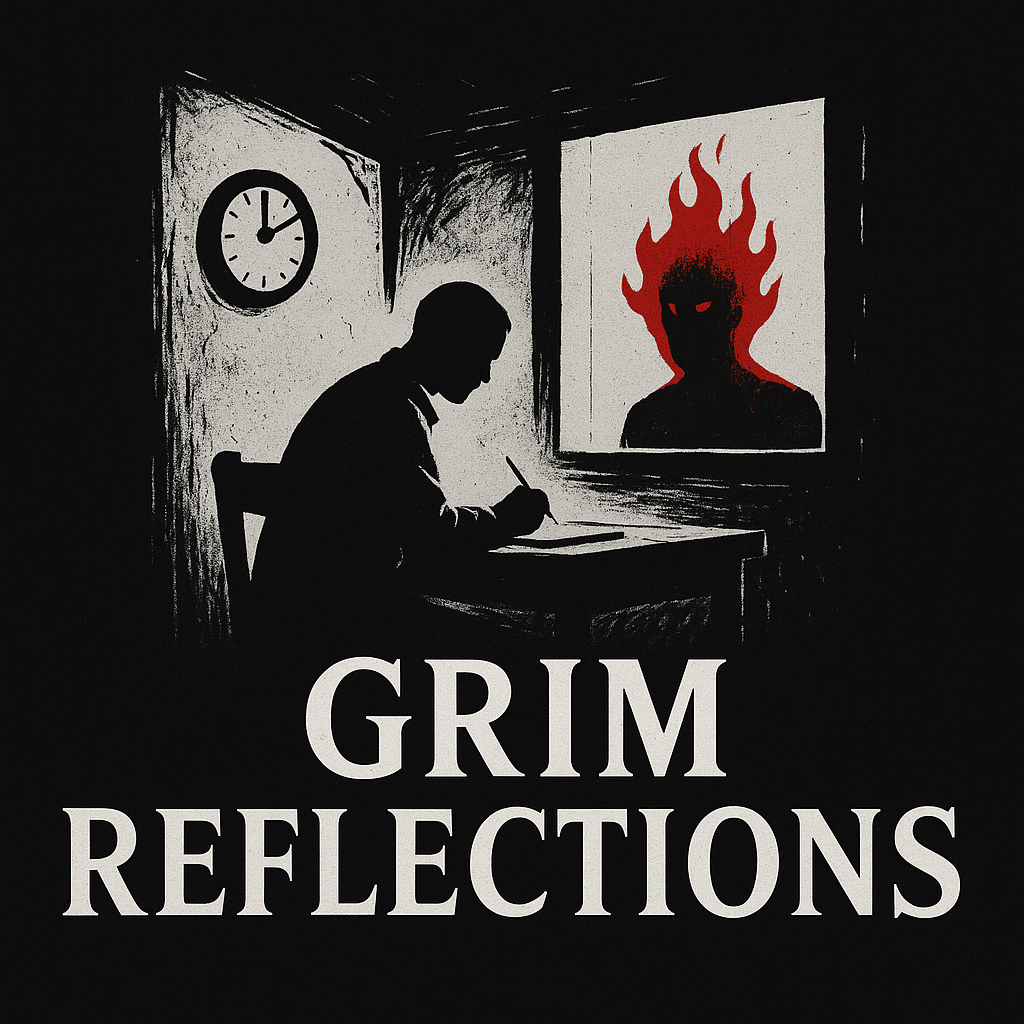
For forty years, I have dwelled alone beneath the earth, in a room so sterile it rivals a surgical theatre. No photographs. No mementos. Only a yellowing calendar and a mahogany clock — my sole tormentor.
That clock, relentless and precise, has ticked without mercy, each beat a cruel metronome marking my decay. Yet I could never destroy it. Its heartless ticking became my last connection to a world that has long forgotten me.
To whoever finds this: do not dismiss my words as the ravings of a lost mind. This parchment, crafted from my own flesh and inked with blood drawn from old wounds, holds my final truth. My name is gone, my past dissolved, but I write so my sorrow echoes into the void beyond my death.
Please, hear me. Weep with me.
Centuries ago, when the 24th century dawned, the Confederate State of Nigeria rose beyond the world’s imagination. Once chained by poverty and corruption, it transformed into an unstoppable scientific giant. What once oppressed them like disease, bad governance, hunger ignited their fiercest innovation. In the ashes of despair, Nigerian youth discovered a fierce will to rise and so they did, surpassing every known boundary.
By investing relentlessly in education and research, they shattered the old world order. While allies doubted and enemies scoffed, Nigeria’s scientists built visions beyond the visible spectrum. Visions meant to solve Earth’s decay and mankind’s endless hunger for more.
In 2357 AD, as Earth’s resources gasped their last breaths, Nigeria’s Galactic Division was tasked with finding a second home. After decades of futile searching, a lost cosmonaut crew stumbled upon an extraordinary planet which was an almost perfect twin of Earth.
It was so elusive in its movement, as if hiding in the dark corners of the galaxy.
They trailed it for 12,680 hours, then finally landed. The air was breathable, gravity kind and the forests echoed with the songs of extinct creatures. The cosmonauts rejoiced like children. They celebrated under alien stars, drunkenly whispering dreams of immortality and salvation.
That night, they dreamt of a man whose face blazed with violent red flames. In their sleep, they could not look directly at him. They could only feel his searing gaze and hear his silent screams.
Returning as heroes, they delivered their samples to Dr. Adekunle Coker and the world’s finest minds. Among the findings, one anomaly stood out: a synthetic particle, unseen in all prior science. This “Divine Particle” bonded instantly to air and replicated without restraint. More hauntingly, it induced collective hallucinations and visions of a burning faced man, whispering in riddles and warning of an endless abyss.
Under strict surveillance, test subjects exposed to the particle drew identical images: a man of flames, looming silently. Some drew him walking away into a horizon of ash, others hovering just beyond reach, screaming soundlessly into their ears.
“Sleep, those little slices of death. How I loathe them.” — Edgar Allan Poe
Soon, the cosmonauts could no longer escape the visions. Awake or asleep, he haunted them, lurking in shadows, slipping through half-closed doors and whispering from the cracks in the walls. Sleep became a terror they dreaded more than death.
One night, they clawed at their own eyes, shrieking that they had dared look upon God and paid the price. When containment failed, chaos erupted. An attendant was murdered. The lab air system was breached. In minutes, the Divine Particle slipped into Earth’s atmosphere.
In nearby towns, people began to report the burning man standing at bedsides, trailing them in the streets, silently watching from rooftops. Suicide rates soared. Some gouged out their eyes, convinced they had seen something forbidden. Others fled, but the particle followed.
Within a year, Africa lay silent. Within five, half of humanity perished. In ten, the world itself became a mausoleum. Yet, as man vanished, Earth healed, forests returned, minerals replenished and creatures long extinct roamed again.
Some believed the cosmonauts had ventured not to a new world, but into a future mankind should never see. Others claimed the burning man was God, punishing humanity for its arrogance. They preached that we had trespassed heaven, looked upon the divine and carried back our doom.
It has been fifty years since the first outbreak. Ten since I last heard another human voice. In this tomb beneath the earth, I write with trembling hands, listening to the clock mock my every breath. I am perhaps the final echo of humanity’s hubris. A witness to our downfall, a monument to our unending thirst for knowledge that no mortal should hold.
I write not in hope, but in defiance. Let my words echo long after the final tick. Let them haunt the silence that remains.
For there are no happy endings. Only ticking clocks and the endless face of flame waiting in the dark.
 My Dark School Of Thoughts
Leave a comment