Folklore4 min read
The Gods Must Be Angry
After a shrine is desecrated, an isolated village must face a reckoning neither faith can explain.
Remastered edition
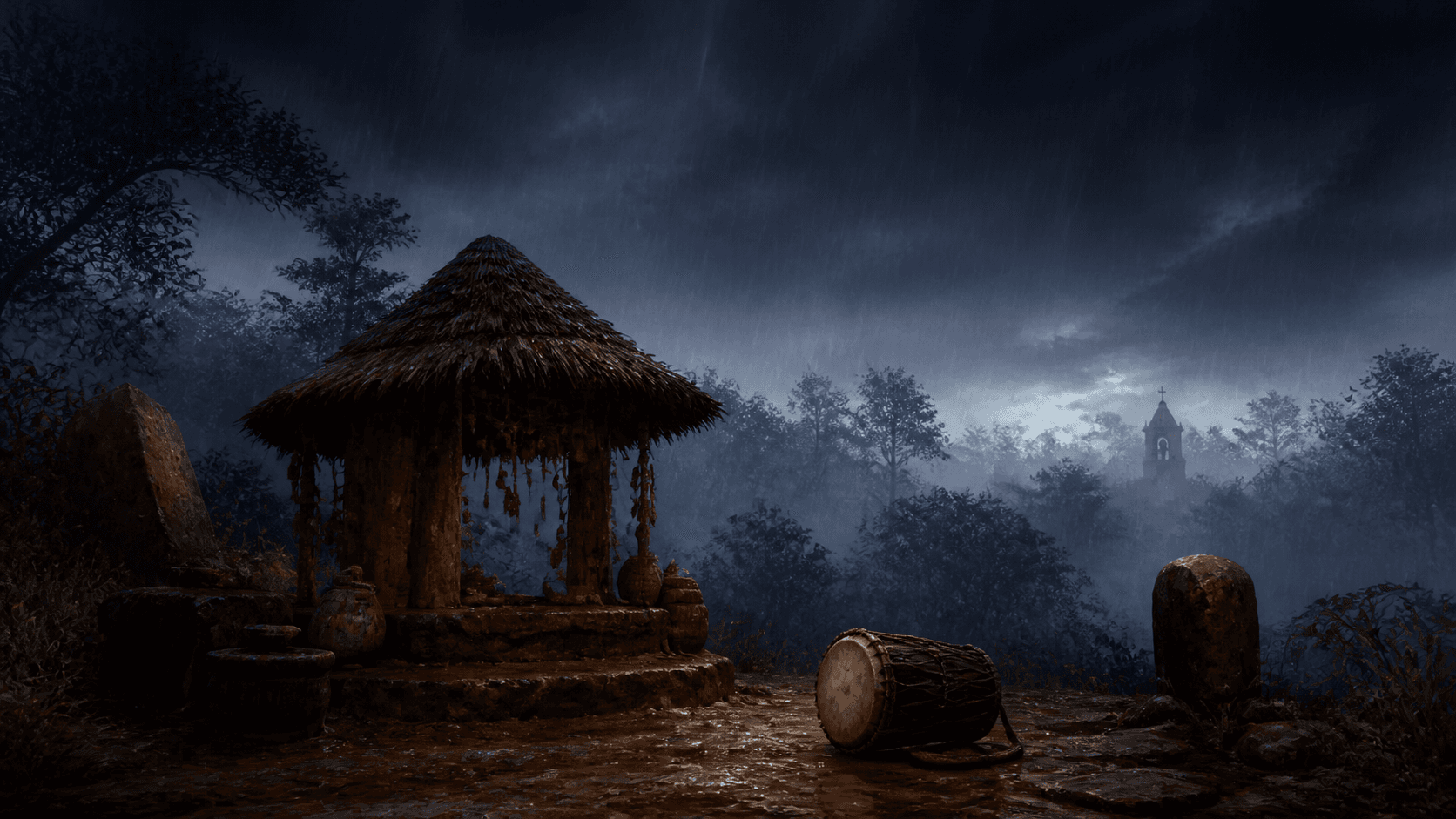
“More often than not, it is better to keep faith with the devil you know, than with an angel you know nothing of.”
Igbo Elerin stood between a mountain, a river, and a forest that no one crossed after dark.
For generations, the village had made its peace with all three. The mountain kept the northern wind. The river fed the farms. The forest took what it was given and asked no questions. At the centre of the village stood a small shrine where elders left palm wine, kola, and songs for the powers they believed watched over the land.
Then Prophet Jeremiah arrived with a bell and a book.
He said the shrine was a lie. He said its guardians were afraid because their old gods had no answer to the new one he carried in his voice. Some listened. Most did not. The elders forbade the new worship, and Jeremiah answered by leading his few followers to the shrine at dawn.
Babajide, the shrine’s keeper, watched them break the clay figures and scatter the offerings into the dust.
He was not a powerful man by the measure of soldiers or chiefs. His back was bent, his robes were faded, and his only instrument was the dundun he carried beneath one arm. But when Jeremiah’s hammer struck the shrine stone, Babajide’s face changed.
“You have opened something,” he said.
Jeremiah rang his bell and told him to leave.
Two days later, the sky went black at noon.
Rain came hard enough to tear roofs from houses. The river lifted into the farms. Lightning split the old silk-cotton tree beside the market. Jeremiah stood under the eaves of his church and proclaimed that judgement had arrived. The elders, watching their fields drown, wondered whether Babajide had been right.
When the storm passed, worse things came with the dark.
Shapes moved through the ruined crops. They were too quick to name and too hungry to ignore. By morning, the village stores had been emptied. By the second night, children began to vanish from their beds. At dawn, bells rang from Jeremiah’s church while the dundun sounded faintly from the forest.
The elders sent for Babajide.
He returned at sunset, carrying no weapon but his drum. The people fell at his feet and promised cattle, yams, cowries, anything he asked for. Babajide looked past them to the broken shrine.
“You think a gift repairs an insult,” he said. “You think fear is the same as reverence.”
Still, he walked to the river and began to play.
The rhythm was low at first, almost gentle. The creatures emerged from the fields in a shivering line. They followed the sound to the water, where the current folded around them. One by one, they disappeared beneath the surface. The river ran red until dawn.
Jeremiah called it sorcery. Some of his followers seized Babajide before anyone could stop them. The elders watched, calculating what they would save by doing nothing.
By evening, Babajide was dead. The church was burning. Jeremiah remained inside, ringing his bell until the smoke took the sound away.
That night, every child in Igbo Elerin heard the dundun.
The next morning, only three remained. One had been unable to see the path. One had been unable to walk it. One had been unable to hear the call. The others were gone, and the elders who had promised safety lay torn across their thresholds.
Mist entered the village before sunset. It gathered around ankles, then shoulders, then roofs. Somewhere inside it, a bell began to ring. Somewhere else, a drum answered.
No one knew which power had returned for them. No one knew whether it was punishment, grief, or the consequence of believing that a sacred thing becomes harmless once another sacred thing is named.
By dawn, Igbo Elerin was silent.
Years later, hunters spoke of a forest that had swallowed a village whole. They said that on nights of heavy rain, a bell could be heard among the trees, followed by the patient voice of a drum.
No one went close enough to decide which god was angry.