Fate3 min read
The Long Walk
A man condemned to walk without rest retraces the choice that cost his friends everything.
Remastered edition
“A smart man knows what to say. A wise man knows whether or not to say it.”
Ajibola had walked for ten years without arriving anywhere.
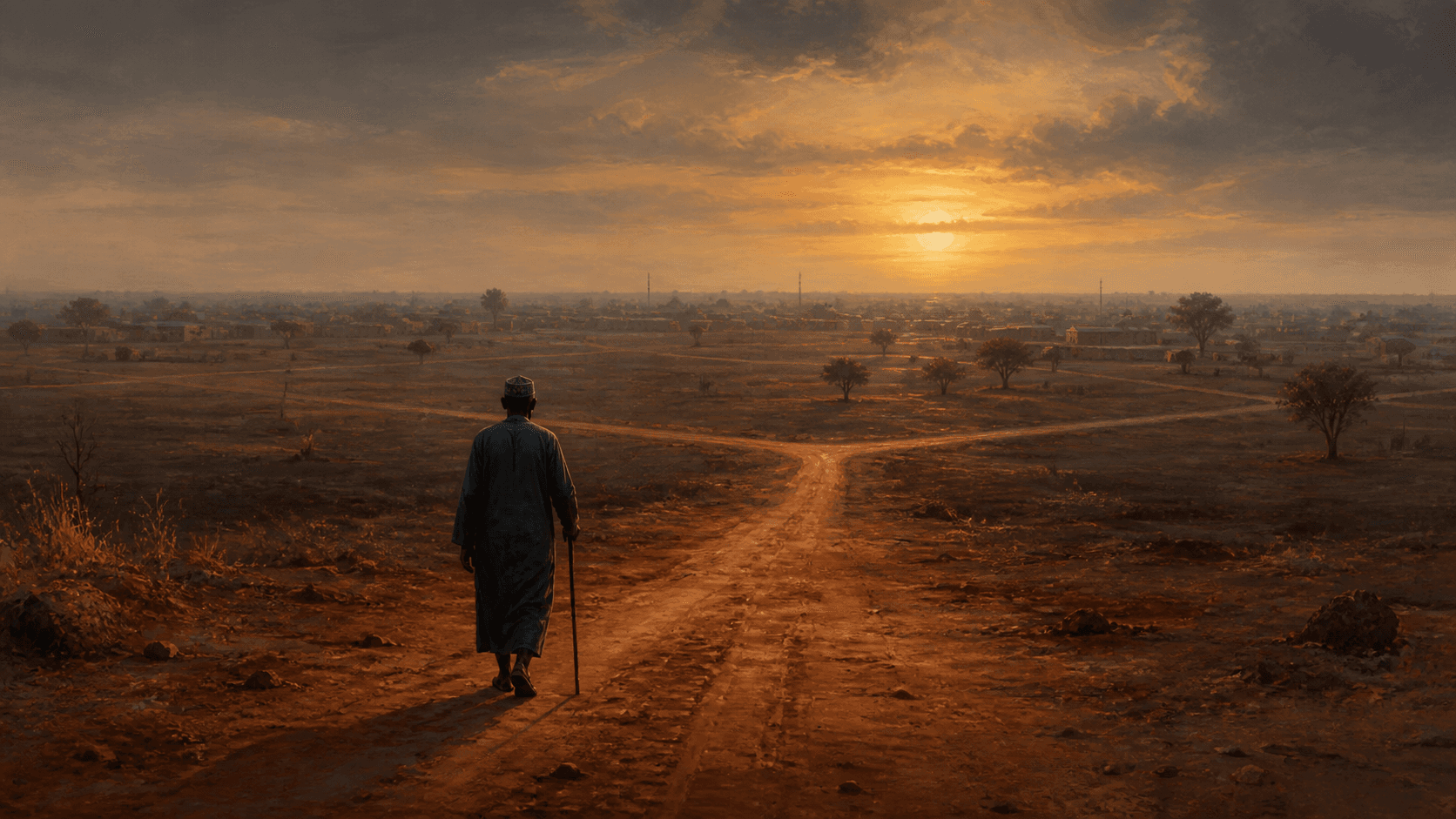
The road outside Ibadan changed beneath his feet, but it never ended. Red dust became asphalt, asphalt became mud, and every town opened its mouth to let him pass through. When exhaustion dragged him down, a pressure rose behind his knees and lifted him again. When strangers offered water, he drank. When they offered help, he kept moving.
People called him mad. Ajibola no longer argued. There were names worse than that, and he had earned some of them.
Before the road, there had been four friends and a journey to Ghana. Dayo stuttered until words became wounds. Yewande carried the cruelty of other people’s eyes. Temi hid her face from mirrors. Abayomi had spent his life bent around a spine that ached each morning before he could greet the day. Ajibola walked with a damaged leg from the accident that had taken his family, and all five of them knew the quiet fatigue of being noticed for the wrong reason.
They went looking for a holiday and found a shrine at the edge of a market town.
The man inside called himself Bokor. He did not promise healing. He promised change, which was more dangerous. On a low wooden altar, he placed a bowl and said each of them could offer one drop of blood for one wish.
Ajibola refused.
He laughed at the old man’s ceremony, at his incense, at the tired certainty in his voice. “I do not believe in your god,” he said. “Or any god that bargains like this.”
Bokor smiled as though he had been waiting for that answer.
“A person who believes in nothing,” he said, “is often the easiest person to lead.”
His friends made their wishes.
For three months, the bargain looked like mercy. Dayo spoke without fear. Yewande moved through rooms with new confidence. Temi’s skin cleared, and Abayomi stood straighter than anyone had seen him stand. They did not become different people. They became people the world had suddenly decided to reward.
Ajibola watched their happiness curdle into distance. He told himself he was glad for them. He was not.
Then the gifts began to take their shape. Dayo could not stop talking, even when his mouth bled. Yewande’s hunger vanished until she became too weak to leave her bed. Temi’s appetite grew past any comfort. Abayomi’s back began to bend again, slowly and monstrously, as though the bargain were writing its receipt into his body.
Ajibola went back to Bokor alone.
The shrine was empty except for the old man and the bowl on the altar. Ajibola fell to his knees. He asked what he could give. He asked what he could do. Bokor listened without pleasure.
“You wanted proof,” he said at last. “Now you have it. You wanted a road to certainty. Walk it.”
Ajibola tried to rise, but his legs had already begun.
He did not believe the road was justice. He did not believe it was faith. He believed it was a curse born from cruelty, grief, and the one moment he had mistaken contempt for strength. Yet the road gave him too much time to make one thing clear: his friends had never needed to be fixed in order to deserve tenderness. It was the world that had failed them. It was he who had failed them when envy made their pain into a lesson about himself.
The sun sank. Ajibola reached another junction. Each direction looked familiar, each one impossible.
For the first time in years, he stopped trying to find home.
He turned towards the road and walked.