Hubris3 min read
Vainglory
Amaka finds a forbidden necklace that turns vanity into an appetite with no end.
Remastered edition
“Vanity well fed is benevolent. Vanity hungry is spiteful.”
Mason Cooley
Amaka kept the necklace beneath her dress, where its red stone rested against her heart like a second pulse.
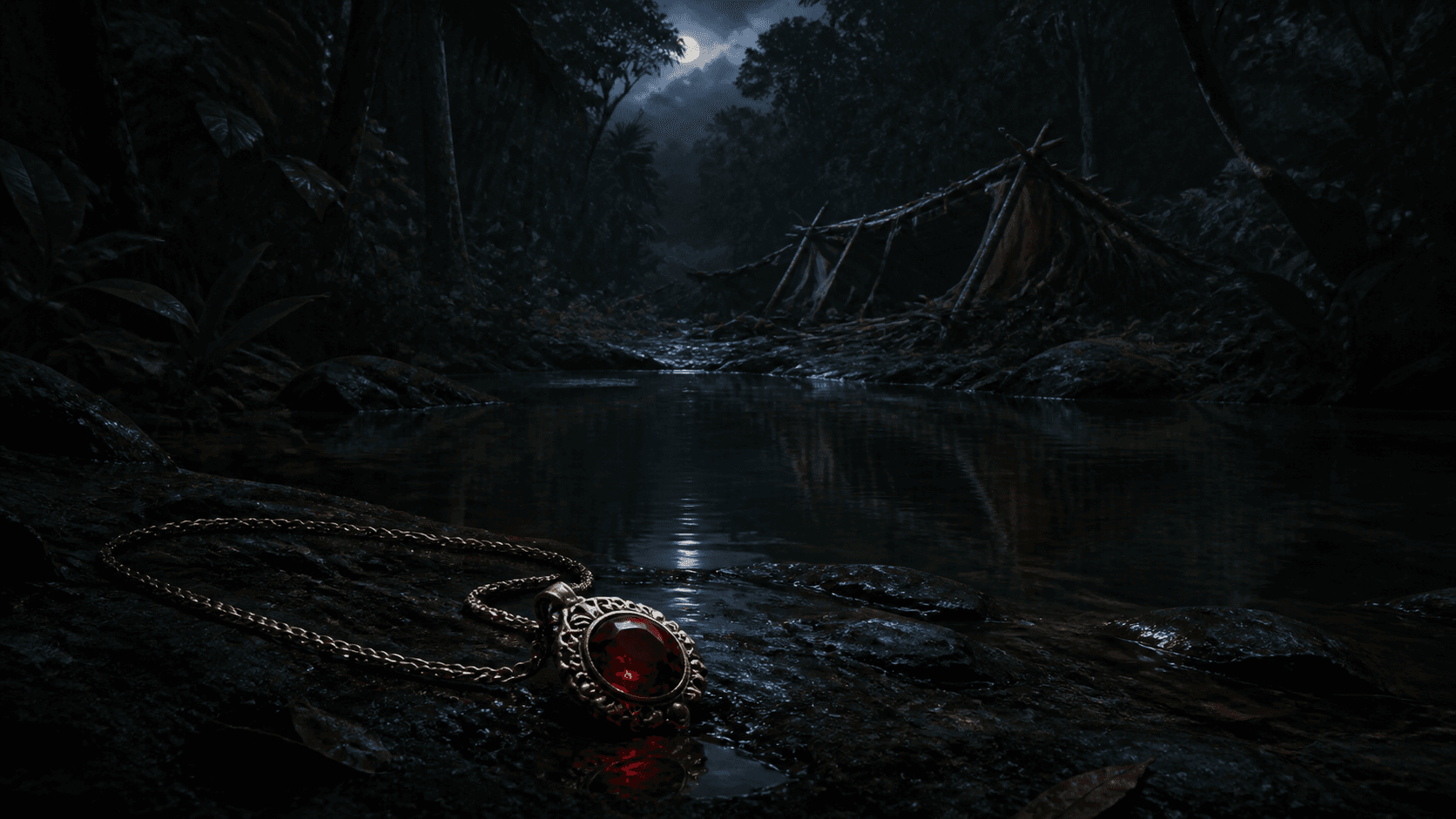
Rain had made a ruin of the shelter she built among the trees. The fire gave her smoke but no warmth. Around her, the forest held its breath. She had been hungry for two days, perhaps three. Hunger no longer mattered. The thing that mattered was the weight beneath her palm and the question it had been asking all night.
Do you remember what you were?
She did.
Before the necklace, Amaka had been admired. Her mother said admiration was a poor house to live in, but Amaka had grown used to its rooms. She knew which colours made strangers turn their heads. She knew how to make a silence feel like an audience. When her grandmother, Nne, locked a cedar box beneath her bed and told her never to search for it, Amaka heard only an insult. There was something beautiful in that box, and beauty, she thought, had no business being kept from her.
Nne went to market one hot afternoon and forgot the key.
The box was harder to open than it looked. Amaka carried it to the river and broke the clasp with a stone. Inside lay a parchment and a necklace of tarnished gold, with a red gem as dark as a drop of blood in water.
The parchment warned that the necklace belonged to no woman, and that it promised a reflection rather than a gift.
Amaka put it on anyway.
At the riverbank, she leaned over the water. Her reflection rose out of the current so bright that for a moment she forgot the sky. The face looking back was not merely hers. It was hers without doubt, hers without age, hers without anyone else’s judgement. She loved it immediately.
The river rippled. Something beneath the reflection opened its eyes.
For a while, the necklace was kind. Doors opened. People watched. The village treated every careless word as though it deserved preserving. Amaka became the centre of rooms she had not entered. Yet each compliment asked for another. Each glance turned her attention back to the stone.
Then the dreams began.
In them, she walked through a palace built from polished black water. Other figures knelt beside the walls, holding their own faces in their hands. A voice told her that every vanity had a keeper, and every keeper eventually fed the thing it guarded.
She woke with grey in her hair.
By the time she fled into the forest, no one in the village could bear to see what the necklace had made of her. It kept her alive only for the next look. It gave her the memory of youth and stole the strength to stand. It made her believe that the red stone still needed her, when in truth it had never needed anything but her attention.
Now the whispers rose with the rain.
Amaka drew out the necklace. The gem glowed softly in the dark. Within it she saw the girl at the river, laughing at a warning she had not understood. She saw the face she had spent years trying to recover.
“Just once,” she whispered.
The necklace warmed beneath her fingers.
She bent towards a pool beside the dying fire. Her reflection waited there, young and unafraid. Behind it, the water held a red light that did not belong to the moon.
Amaka touched the stone.
The forest went silent.
At dawn, a hunter found an empty shelter and a necklace lying in the mud. Its gem was dull until he lifted it. Then, in its polished surface, he saw himself standing taller, richer, beloved by everyone he had ever wanted to impress.
He smiled before he knew he had done it.